
When it comes to shoulder training, the rear deltoids (also known as posterior delts) are often neglected. Many lifters focus heavily on the front and side delts for aesthetic reasons, but underdeveloped rear delts can lead to poor posture, imbalances, and even shoulder pain.
If your goal is to build well-rounded, strong shoulders, incorporating targeted rear delt exercises into your training routine is essential.
Why Rear Delts Matter
The rear delts are responsible for shoulder extension, external rotation, and horizontal abduction—movements critical to posture, upper back strength, and injury prevention. Strong rear delts help:
- Improve posture by pulling the shoulders back
- Balance out front-dominant pushing movements (like bench press)
- Enhance performance in compound lifts and sports
- Prevent shoulder injuries
Here’s a breakdown of some of the best isolation and compound movements to target the rear delts and improve your shoulder development.
Best Exercises to Build Rear Delts
1. Bent-Over Dumbbell Reverse Fly
Muscles worked: Rear delts, rhomboids, traps
How to do it:
- Hinge at the hips with a flat back, dumbbells in hand
- With a slight bend in your elbows, raise your arms out to the sides until parallel to the floor
- Squeeze your shoulder blades together, then return with control
✅ Tip: Go lighter with strict form for better activation.
2. Face Pulls (Cable or Band)
Muscles worked: Rear delts, rotator cuff, upper traps
How to do it:
- Attach a rope to a high pulley
- Pull the rope toward your face, leading with your elbows
- Focus on pulling the rope apart at the end of the movement
✅ Tip: Keep elbows high and rotate slightly externally at the top.
3. Rear Delt Fly Machine
Muscles worked: Rear delts
How to do it:
- Sit facing the machine (chest against the pad)
- Grab the handles and push out and back in a reverse fly motion
- Control the motion throughout the entire range
✅ Tip: Avoid using momentum—slow and steady reps give better isolation.
4. Barbell or Dumbbell Reverse Fly on Incline Bench
Muscles worked: Rear delts, upper back
How to do it:
- Set a bench to a low incline and lie chest-down
- Let the dumbbells hang, then raise them in a reverse fly pattern
- Pause at the top and lower under control
✅ Tip: Lying on a bench reduces lower back strain and prevents cheating.
5. Cable Rear Delt Crossovers
Muscles worked: Rear delts
How to do it:
- Use two low pulley cables and cross your arms in front of you
- Pull the handles outward and slightly upward in a reverse fly motion
- Squeeze the rear delts and return slowly
✅ Tip: Use a lighter weight and focus on the mind-muscle connection.
6. Face-Down Rear Delt Raises on Stability Ball
Muscles worked: Rear delts, core stabilizers
How to do it:
- Lie face-down on a stability ball with dumbbells
- Raise your arms in a reverse fly motion, keeping your core engaged
✅ Tip: Adds a balance challenge while still targeting the rear delts.
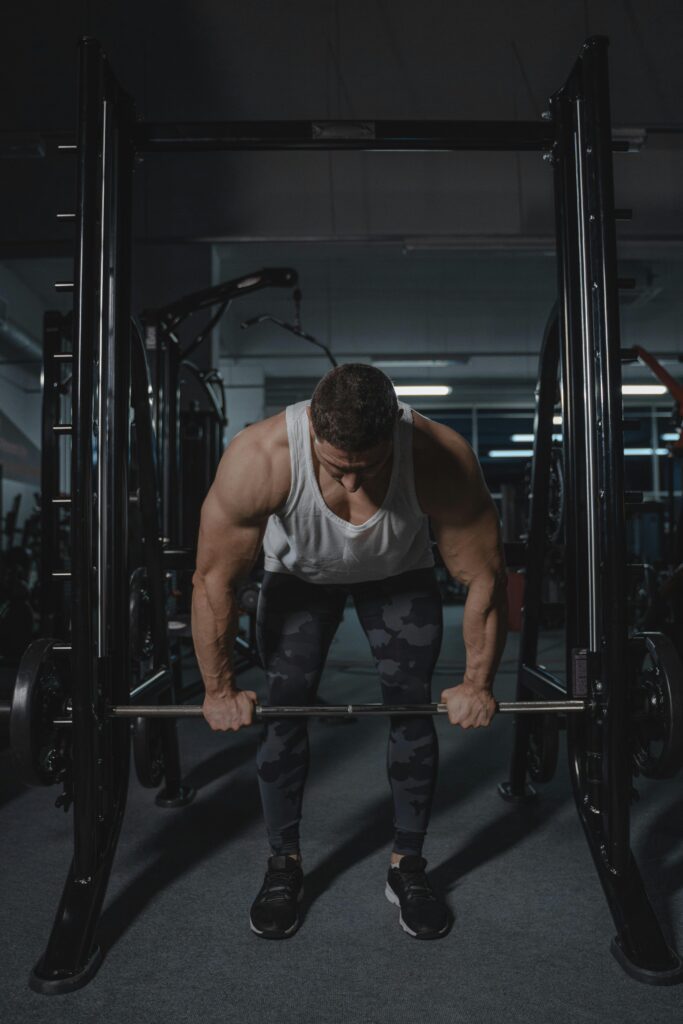
7. Bent-Over Barbell or Dumbbell Row (Rear Delt Focused)
Muscles worked: Rear delts, lats, rhomboids, traps
How to do it:
- Hinge at the hips with a flat back, barbell or dumbbells in hand
- Pull the weight toward your upper chest or collarbone, keeping elbows flared out at ~45–90 degrees
- Focus on squeezing your shoulder blades together at the top
- Lower with control and avoid using momentum
✅ Tip: Unlike traditional rows that target the lats, flare your elbows and pull high to shift the emphasis to the rear delts.
Training Tips for Rear Delt Growth
- Train 2x per week for optimal hypertrophy
- Keep reps moderate (10–15) for better control and contraction
- Focus on time under tension, not weight
- Include rear delt work at the start or end of upper body days
- Don’t rely solely on compound lifts—isolation matters for rear delts
Final Thoughts
Rear delts might be small muscles, but they play a huge role in your overall shoulder health, posture, and aesthetics. Consistently adding a mix of compound and isolation rear delt movements can help you avoid imbalance, reduce injury risk, and build a strong, athletic upper body.
Don’t skip them—rear delts are the key to well-rounded shoulders and long-term shoulder health.
