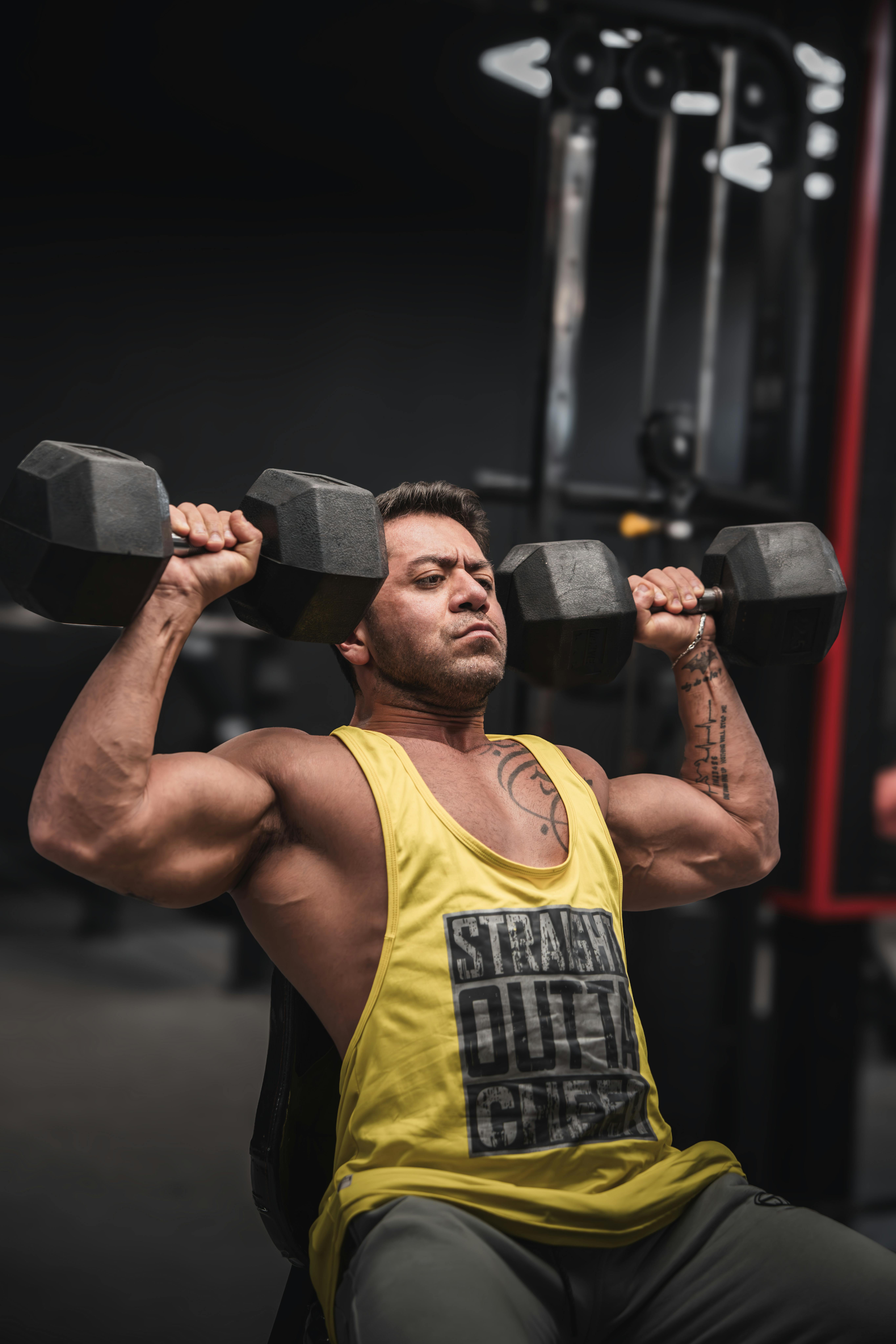
The Arnold Press is a popular shoulder exercise that targets all three heads of the deltoid muscle (anterior, lateral, and posterior) while also engaging the triceps, trapezius, and core for stabilization. However, its unique rotational movement can place stress on the shoulder joint, potentially leading to pain or injury if not performed correctly. Below is a comprehensive guide based on web research, addressing proper form, identifying issues that could cause pain or injury, and strategies to manage or prevent pain during the Arnold Press.
Proper Form for the Arnold Press
To minimize the risk of shoulder pain or injury, proper form is critical. Here are key tips for executing the Arnold Press correctly:
- Starting Position:
- Seated or Standing: The Arnold Press can be performed seated (preferred for beginners to reduce lower back strain) or standing. If standing, maintain a slight bend in the knees and engage your core to stabilize your spine.
- Grip and Dumbbell Placement: Hold dumbbells at shoulder height with palms facing your body (supinated grip). Elbows should be tucked close to the torso, directly under the wrists for stability.
- Posture: Keep your back straight, chest lifted, and shoulder blades slightly retracted (pulled back and down). Avoid slouching or arching your lower back, as this can shift stress to the shoulders.
- Movement Execution:
- Controlled Rotation: As you press the dumbbells overhead, rotate your wrists gradually so that your palms face forward at the top of the movement. The rotation should be smooth and controlled, avoiding abrupt or excessive twisting.
- Range of Motion: Press the dumbbells until your arms are nearly fully extended but avoid locking out your elbows to reduce joint strain. Stop the rotation just short of a full 180-degree turn (palms at about a 45-degree angle to the torso) to minimize impingement risk.
- Descent: Lower the dumbbells slowly back to the starting position while rotating your wrists so palms face your body again. Maintain control to maximize muscle engagement and reduce momentum.
- Core Engagement: Brace your core throughout the movement to stabilize your torso and prevent arching of the lower back, which can indirectly stress the shoulders.
- Weight Selection: Start with lighter weights to master the form. The Arnold Press is not ideal for heavy loads due to the rotational stress on the shoulder joint. Gradually increase weight only when you can maintain perfect form for 2–3 sets of 8–12 repetitions.
- Warm-Up and Cool-Down: Perform dynamic stretches (e.g., arm circles, shoulder rolls) before starting and static stretches (e.g., chest openers, cross-body shoulder stretches) afterward to prepare and relax the shoulder muscles.
Identifying Issues That Could Cause Pain or Injury
Several factors can contribute to shoulder pain or injury during the Arnold Press. Recognizing these issues can help you take preventive measures:
- Improper Form:
- Excessive Rotation: Over-rotating the wrists (beyond a 45-degree angle at the top) can reduce the subacromial space, increasing the risk of shoulder impingement or rotator cuff strain.
- Flaring Elbows: Allowing elbows to flare out too far from the body can place undue stress on the shoulder joint and rotator cuff muscles.
- Arching the Back: Over-arching the lower back, especially in a standing position, compensates for limited shoulder mobility and shifts stress to the shoulders and spine.
- Forward Head Posture: Jutting the head forward during the press can strain the neck and upper trapezius, contributing to shoulder discomfort.
- Weak or Imbalanced Muscles:
- Rotator Cuff Weakness: The rotator cuff muscles (supraspinatus, infraspinatus, teres minor, subscapularis) stabilize the shoulder joint. If they are weak, the shoulder may not stay properly aligned, leading to impingement or tendinopathy.
- Muscle Imbalances: Overdeveloped anterior deltoids or chest muscles compared to weaker posterior deltoids or upper back muscles can pull the shoulder forward, increasing injury risk.
- Overtraining or Insufficient Recovery:
- Repetitive overhead movements without adequate rest can lead to muscle fatigue, inflammation, or overuse injuries like tendinitis or bursitis.
- Rapid increases in training volume (e.g., adding multiple Arnold Press sessions per week) can overwhelm the shoulder tissues.
- Pre-Existing Conditions or Mobility Issues:
- Limited shoulder flexion or abduction (less than 90 degrees pain-free) can make the Arnold Press painful or unsafe.
- Previous injuries, such as rotator cuff strains, labral tears, or shoulder impingement, increase vulnerability to pain during overhead pressing.
- Heavy Weights: Using weights that are too heavy compromises form, increases momentum, and places excessive stress on the shoulder joint and rotator cuff.
- Poor Scapular Positioning:
- Failure to retract and depress the shoulder blades (scapular retraction and depression) can lead to instability and impingement during the press.
Preventing Shoulder Pain During the Arnold Press
To reduce the risk of shoulder pain or injury, incorporate the following strategies:
- Strengthen Supporting Muscles:
- Rotator Cuff Exercises: Perform external and internal rotation exercises with resistance bands or light dumbbells (e.g., 2–5 lbs) to strengthen the rotator cuff. Example: Lie on your side, hold a light dumbbell, and rotate your arm outward for 2–3 sets of 10–15 reps.
- Upper Back and Posterior Deltoids: Include exercises like seated rows, face pulls, or reverse flys to balance shoulder strength and improve posture.
- Scapular Stabilizers: Practice scapular retraction exercises (e.g., squeezing shoulder blades together) to enhance shoulder stability.
- Improve Shoulder Mobility:
- Perform mobility exercises like doorway chest stretches or thoracic spine extensions to increase shoulder and upper back flexibility.
- Use exercises like the landmine press to gradually restore overhead range of motion if mobility is limited.
- Maintain Proper Posture:
- Practice good posture throughout the day by keeping shoulders back and down, chest lifted, and neck neutral. Regular breaks to stretch and move can prevent slouching, which narrows the subacromial space.
- During the Arnold Press, ensure shoulder blades are retracted and depressed to stabilize the joint.
- Progress Gradually:
- Start with light weights and focus on form before increasing load. Gradually increase weight in small increments (e.g., 2–5 lbs) only when you can complete sets pain-free.
- Avoid sudden increases in training volume. If adding Arnold Press sessions, increase frequency slowly (e.g., from once to twice per week).
- Use Alternative Exercises:
- If the Arnold Press causes discomfort, try safer alternatives like:
- These exercises can build shoulder strength while minimizing injury risk.
- Warm-Up Thoroughly:
- Perform 5–10 minutes of dynamic warm-ups targeting the shoulders, such as arm circles, shoulder rolls, or light resistance band exercises, to increase blood flow and flexibility.
- Avoid Risky Practices:
- Steer clear of performance-enhancing substances that may weaken tendons.
- Limit exercises with high impingement risk (e.g., behind-the-head presses, upright rows) if you’re prone to shoulder issues.
Managing Pain During the Arnold Press
If you experience shoulder pain while performing the Arnold Press, take the following steps:
- Stop Immediately:
- Cease the exercise if you feel pain, especially if it’s sharp or rates 4/10 or higher on a pain scale (0 = no pain, 10 = excruciating).
- Mild discomfort (0–3/10) during rehab exercises may be acceptable, but pain should not worsen with each repetition.
- Modify the Exercise:
- Reduce Weight: Lower the dumbbell weight to a level where you can perform the movement pain-free.
- Limit Range of Motion: Perform partial reps (e.g., stop before full overhead extension) to avoid painful Ascertain what specific changes need to be made to the instructions provided to ensure the safety and effectiveness of the exercise for users with shoulder pain.
- Switch to Alternatives:
- Temporarily replace the Arnold Press with less stressful exercises like the landmine press or bottoms-up kettlebell press until pain subsides.
- These alternatives reduce shoulder strain while maintaining strength-building potential.
- Rehabilitation Exercises:
- Perform rotator cuff strengthening exercises (e.g., external rotations with a resistance band) and scapular stabilization drills (e.g., band pull-aparts) to address underlying weaknesses. Do 2–3 sets of 10–15 reps, 3–5 days per week.
- Incorporate mobility exercises like gentle arm swings or cross-body stretches to restore range of motion. Perform daily, up to 3 times per day, ensuring movements are pain-free.
- Rest and Recover:
- Allow adequate rest between shoulder workouts (e.g., 48–72 hours) to prevent overuse injuries.
- Apply ice to the shoulder for 15–20 minutes if inflammation or soreness occurs post-workout.
- Seek Professional Help:
- If pain persists for more than 2 weeks or worsens, consult a physical therapist or doctor. They can assess for conditions like rotator cuff injuries, shoulder impingement, or labral tears and provide a tailored rehab plan.
- A professional can evaluate your form and identify specific biomechanical issues contributing to pain.
- Monitor Pain Levels:
- Rate pain on a 0–10 scale. If exercises cause pain above 5/10, stop and modify or seek medical advice. Exercises should not increase overall pain, though mild discomfort during rehab is normal as muscles adapt.
Additional Considerations
- When to Avoid the Arnold Press: If you have a history of shoulder injuries (e.g., rotator cuff tears, impingement) or limited shoulder mobility, the Arnold Press may not be suitable due to its high injury risk. Consult a professional before including it in your routine.
- Individual Differences: Everyone’s shoulder anatomy and injury history differ. Work with a certified trainer or physical therapist to ensure the exercise is appropriate for your body and goals.
- Long-Term Shoulder Health: Consistently incorporate rotator cuff and upper back strengthening, maintain good posture, and avoid overtraining to prevent recurring shoulder issues.
Final Thoughts
To prevent shoulder pain during the Arnold Press, prioritize proper form by maintaining scapular retraction, controlling wrist rotation, and using light weights with a braced core. Identify potential issues like poor form, weak rotator cuff muscles, or overtraining, and address them through targeted exercises, mobility work, and gradual progression. If pain occurs, stop immediately, modify the exercise, and focus on rehabilitation exercises while consulting a professional if needed. By following these guidelines, you can reduce the risk of injury and safely incorporate the Arnold Press into your workout routine.
Check Out This Incredible Video.
It Helped me to understand visually how to do this exercise properly. I hope it helps you!

