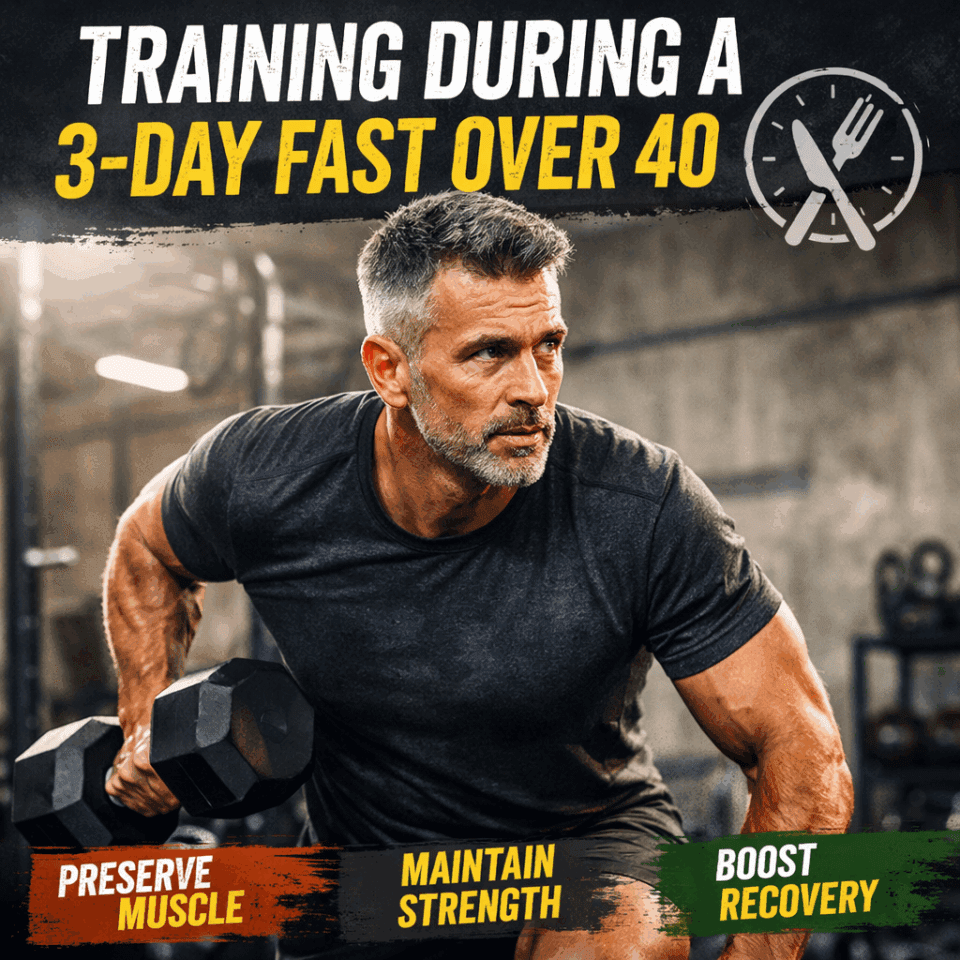
Fasting and fitness are often treated as opposites—but when done intentionally, they can work together. For adults over 40, the question isn’t whether fasting works, but how to fast without sacrificing muscle, strength, or joint health.
One of the most common concerns is this:
“What happens if I continue lifting moderate weights during a full 3-day fast?”
The answer is nuanced—but encouraging. When programmed correctly, resistance training during a short fast can preserve muscle, maintain strength patterns, and support long-term progress rather than derail it.
Let’s break down what’s really happening in the body and how to do this safely.
Why Muscle Loss Becomes a Bigger Concern After 40
As we age, several physiological changes occur:
- Muscle protein synthesis becomes less responsive
- Recovery takes longer
- Cortisol sensitivity increases
- Inactivity and calorie restriction can accelerate muscle loss
This doesn’t mean muscle loss is inevitable—it means the signals you send your body matter more.
During a fast, calories are absent—but mechanical tension from resistance training remains a powerful signal that muscle tissue is still needed.
How Lifting During a 3-Day Fast Affects Muscle
Muscle Preservation Improves With Resistance Training
Resistance training—even at moderate intensity—helps:
- Reduce muscle protein breakdown
- Preserve neuromuscular coordination
- Maintain strength patterns and motor learning
This is especially important during fasting, when the body is prioritizing energy efficiency.
Key distinction:
You are not building new muscle during a fast.
You are protecting existing muscle.
For adults over 40, this protective signal is often more important than aggressive fat loss.
Strength: What You’ll Keep and What You’ll Feel
During a 3-day fast with moderate lifting:
What’s preserved:
- Neural strength
- Movement efficiency
- Familiarity with compound lifts
What declines temporarily:
- Endurance
- Pump
- High-rep performance
- Glycogen-dependent output
Weights may feel heavier—not because muscle is gone, but because fuel is low. This is normal and reversible within days of re-feeding.
Hormones, Stress, and Recovery (The Make-or-Break Factor)
Fasting creates a unique hormonal environment:
- Growth hormone increases (muscle-sparing)
- Insulin remains low (fat mobilization)
- Cortisol can rise if stress is unmanaged
Resistance training helps blunt muscle breakdown, but only if volume is controlled.
The danger isn’t lifting during a fast—it’s doing too much.
Over 40, excessive volume during fasting can elevate cortisol enough to work against your goals.
Injury Risk: Why Exercise Selection Matters More Than Load
In a fasted state:
- Muscle glycogen is low
- Joint lubrication may be reduced
- Reaction time and coordination can dip slightly
This increases injury risk if ego lifting or complex movements are used.
Exercises to Limit During a Fast
- Olympic lifts
- Max-effort deadlifts
- High-rep squats
- Explosive plyometrics
Safer, Smarter Choices
- Dumbbells and machines
- Controlled compound lifts
- Isometrics and carries
- Slower tempo, full control
The goal is signal, not strain.
Optimal Training Structure During a 3-Day Fast (Over 40)
Frequency
- 2–3 short sessions total
- 20–40 minutes each
Intensity
- ~60–70% of normal working weight
- RPE 6–7
- Leave 3–4 reps in reserve
Volume
- 1–2 sets per exercise
- 4–6 movements per session
- No failure training
Sample Fasted Full-Body Session
- Goblet squats – 2×5
- Chest-supported rows – 2×6
- Dumbbell bench or push-ups – 2×5
- Light Romanian deadlift – 1–2×5
- Planks or loaded carries – 2 short rounds
Rest generously and focus on form.
Non-Negotiables During the Fast
To protect muscle and recovery:
- Stay hydrated
- Use electrolytes (especially sodium)
- Prioritize sleep
- Walk and perform light mobility on non-lifting days
If you experience dizziness, coordination loss, or form breakdown—stop training.
Breaking the Fast: Where Many People Lose the Benefit
The first 24 hours after the fast matter more than the fast itself.
Re-Feed Priorities
- Protein (40–60g)
- Moderate carbohydrates
- Easy-to-digest foods
- Fats added slowly
Avoid heavy training before re-feeding and resist the urge to “test” your strength immediately.
The Big Picture: What This Strategy Is (and Isn’t)
Training during a 3-day fast:
- ✅ Preserves muscle better than complete rest
- ✅ Maintains strength patterns
- ✅ Improves insulin sensitivity
- ❌ Does not build muscle
- ❌ Is not meant to be frequent or chronic
This is a short-term discipline tool, not a lifestyle.
Final Takeaway (MooseFit Perspective)
For adults over 40, strategic fasting combined with intelligent resistance training is not about punishment—it’s about stewardship.
You’re telling your body:
“We don’t need excess—but we still need strength.”
Handled correctly, a 3-day fast with moderate training can support long-term fitness, joint health, and consistency, not sabotage it.
