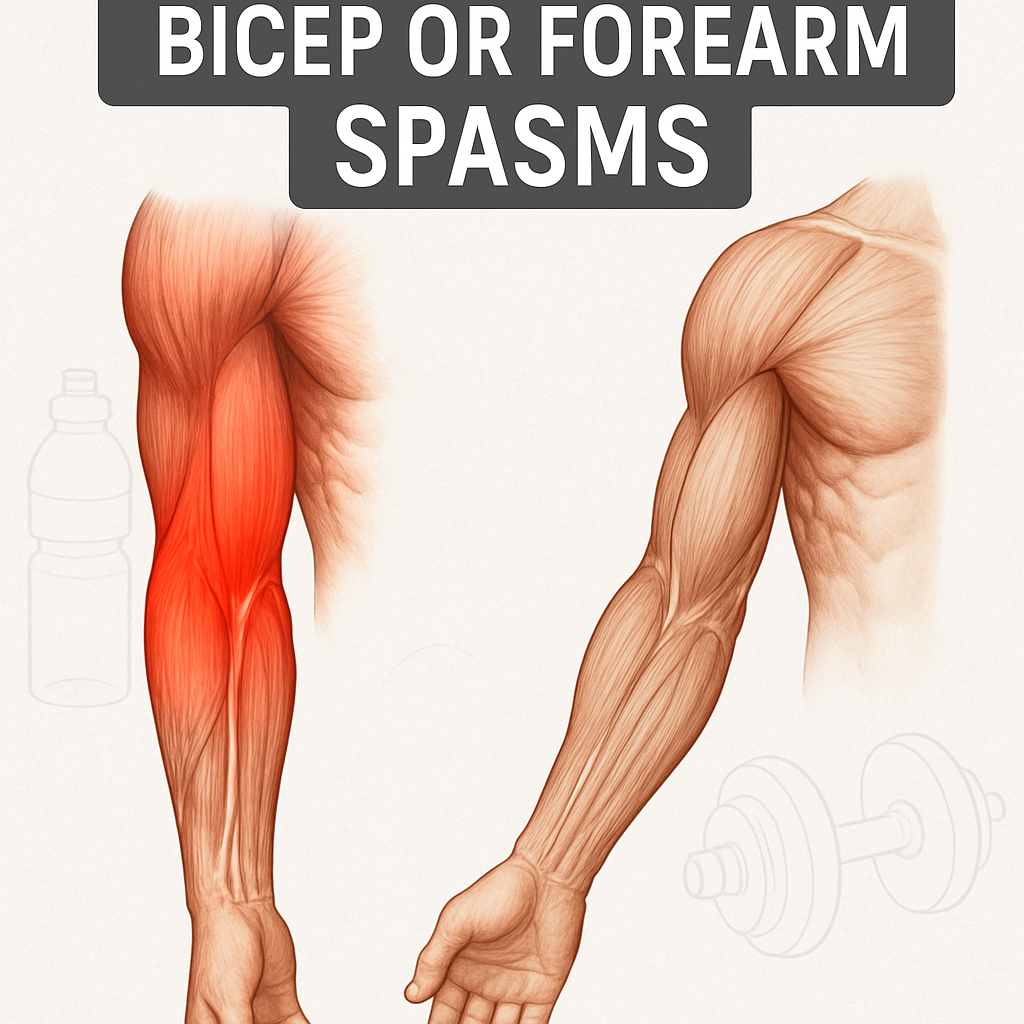
Muscle spasms in the bicep or brachioradialis (the prominent forearm muscle used in grip and lifting) can strike without warning—often during or after a workout. These painful contractions can be alarming, especially if they catch you mid-set or in the middle of your daily routine.
Understanding how to treat these spasms—and what causes them—is essential for any fitness enthusiast, athlete, or anyone who uses their arms heavily throughout the day.
What Causes Bicep or Brachioradialis Spasms?
Spasms in these muscles are typically caused by:
- Overuse or fatigue from repetitive lifting or gripping
- Dehydration or electrolyte imbalances
- Poor lifting mechanics
- Nerve compression or overexertion
- Inadequate warm-up or stretching
Immediate Steps to Treat a Bicep or Brachioradialis Spasm
If you feel a spasm coming on—or you’re in the middle of one—here are some steps to get relief quickly:
1. Stop the Activity
Pause your workout or task immediately. Trying to push through a spasm can worsen the cramp or lead to strain.
2. Gently Stretch the Muscle
- For bicep spasms: Extend your arm fully with your palm facing forward. Gently press your hand back to stretch the front of the upper arm.
- For brachioradialis spasms: Extend your arm straight, turn your palm downward (pronation), and flex the wrist slightly inward to stretch the top of the forearm.
3. Massage the Area
Use your fingers or a massage tool to apply gentle pressure. Move in small circles or stroke along the muscle fibers until the spasm releases.
4. Apply Heat or Ice
- Use heat (like a warm compress or heating pad) to relax the muscle and increase blood flow.
- Ice may help if there’s residual soreness or minor inflammation after the cramp subsides.
5. Hydrate and Replenish Electrolytes
Drink water and consider adding an electrolyte-rich beverage—especially if you’ve been sweating heavily. Potassium, magnesium, calcium, and sodium all play key roles in proper muscle function.
Long-Term Prevention Strategies
Preventing spasms is often about preparation, balance, and good recovery habits. Here’s how to stay ahead of future cramps:
✅ Warm-Up and Cool Down Properly
Before lifting, do dynamic stretches or light resistance warm-ups. After your workout, take a few minutes to stretch your arms thoroughly.
✅ Balance Your Training
Don’t overtrain the biceps with curls and pulling exercises without strengthening opposing muscles (like triceps). Also, incorporate grip strength and forearm endurance exercises to support the brachioradialis.
✅ Stay Hydrated and Eat for Muscle Health
Make sure your diet includes enough:
- Magnesium (leafy greens, almonds, seeds)
- Potassium (bananas, sweet potatoes)
- Calcium (dairy, leafy greens)
- Sodium (especially if training intensely in heat)
✅ Avoid Repetitive Overuse
If your training volume is too high—or your form is off—you may be stressing the muscle more than necessary. Consider modifying volume or seeking a form check from a coach or experienced lifter.
When to See a Doctor or Specialist
Most spasms are harmless and resolve quickly. But you should seek medical advice if:
- Spasms happen frequently or in the same location
- There’s ongoing pain, weakness, or tightness
- You experience numbness or tingling (which could indicate a nerve issue)
- Home treatment doesn’t relieve symptoms
Final Thoughts
Muscle spasms—especially in high-use areas like the biceps and forearms—can be frustrating. But with the right care, hydration, and training balance, you can recover quickly and prevent them in the future.
If you’re pushing your limits in training, these cramps might just be a sign your body is adapting—but don’t ignore them. Listen to your body, fuel it properly, and prioritize recovery just as much as effort.
📩 Need Help With Muscle Recovery or Training Structure?
Join our free community or request a personalized recovery and strength plan tailored to your fitness level and goals. Click [here] to get started.
