
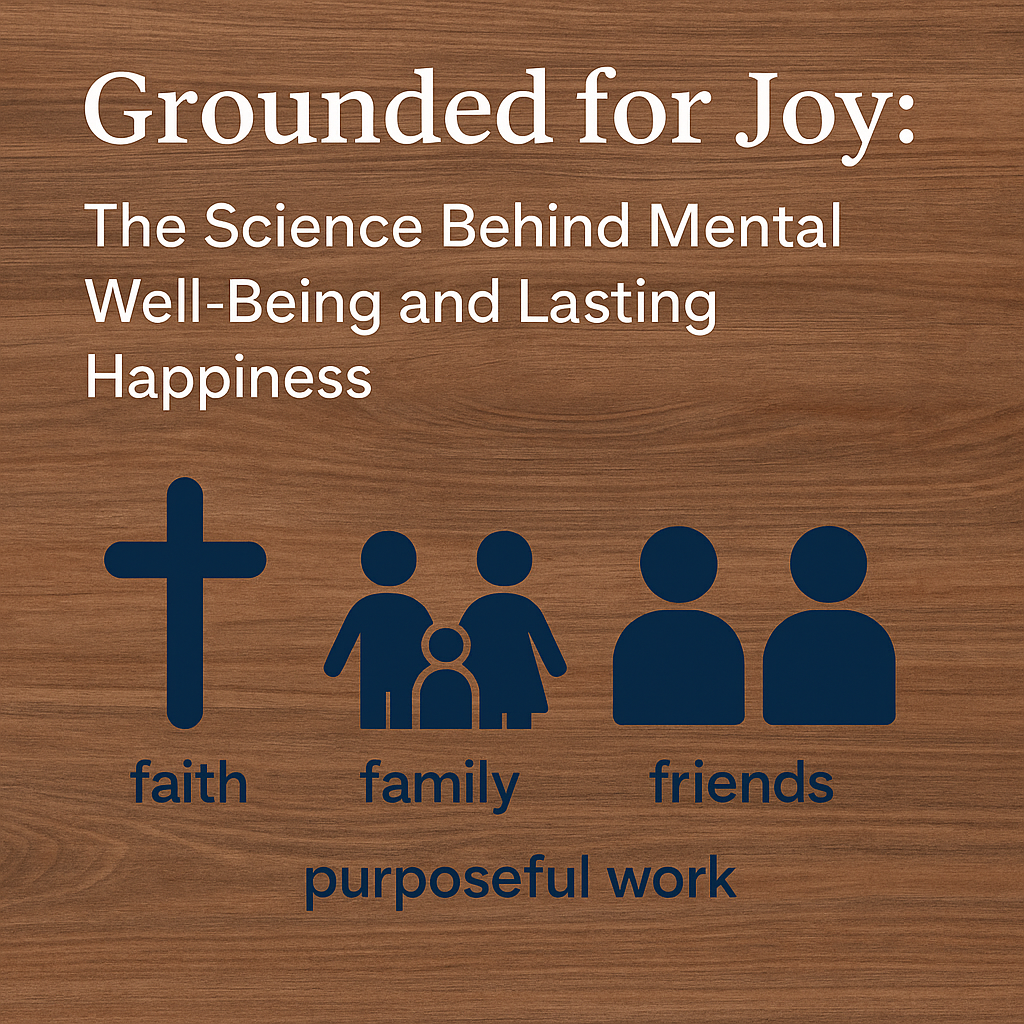
In our fast-paced, digitally connected world, maintaining mental and emotional well-being is more crucial than ever. Research consistently shows that true happiness isn’t merely about fleeting pleasures but is deeply rooted in our connections to faith, family, friends, and purposeful work.
The Importance of Mental and Emotional Health
Mental and emotional health are foundational to overall well-being. A comprehensive review published in Frontiers in Psychology highlights that university students often face heightened levels of stress, anxiety, and depression, particularly during mid-course periods. These challenges can impede academic performance and personal growth. (PubMed Central)
Similarly, a study in BMC Public Health found that factors such as academic pressure and lack of engagement significantly impact students’ mental health. These findings underscore the necessity of proactive mental health management to foster resilience and success.(BioMed Central)
Anchors of Happiness: Faith, Family, Friends, and Purposeful Work
Harvard professor Arthur C. Brooks identifies four key pillars that contribute to lasting happiness: faith, family, friendships, and meaningful work. Let’s delve into each:
Faith: A Source of Hope and Community
Engaging in spiritual or religious practices has been linked to improved mental well-being. The Wall Street Journalreports that active participation in religious communities provides a strong sense of belonging, which can counter feelings of isolation and depression. (WSJ)
Family: The Bedrock of Support
Strong family connections offer emotional support and a sense of security. Research indicates that individuals with close familial ties experience higher levels of life satisfaction and resilience in the face of adversity.
Friendships: Enhancing Life’s Joy
Meaningful friendships contribute significantly to happiness. A study published in the Proceedings of the National Academy of Sciences found that people often report higher levels of happiness when interacting with friends compared to other social interactions. (Verywell Mind, PubMed Central)
Purposeful Work: Finding Meaning in Daily Life
Engaging in work that aligns with personal values and strengths leads to greater job satisfaction and overall happiness. Brooks emphasizes that meaningful work—defined by earning success and serving others—plays a crucial role in a fulfilling life. (The Fedeli Group)
Real-Life Insights: Choosing Meaning Over Media
The 2025 World Happiness Report highlights that American Gen Z adults rank 62nd in global well-being. However, some young individuals are bucking this trend by prioritizing religion, family, and meaningful routines over social media. They report higher levels of happiness and resilience, attributing their well-being to these conscious lifestyle choices. (New York Post)
Further Exploration: The Science of Happiness
For a deeper understanding of these concepts, consider watching these following videos, where Arthur C. Brooks discusses the science behind happiness and how to cultivate it in daily life. I found them very insightful.
Keys to Finding Happiness

The Art And Science Of Happiness

Secret to Happiness in Leadership

Final Thoughts
Prioritizing mental and emotional well-being is not just beneficial—it’s essential. By grounding ourselves in faith, nurturing family and friendships, and engaging in purposeful work, we lay the foundation for a happier, more fulfilling life.
We’d love to hear your thoughts! Share your experiences and strategies for maintaining mental and emotional well-being in the comments below.
